Application for Taking X-rays
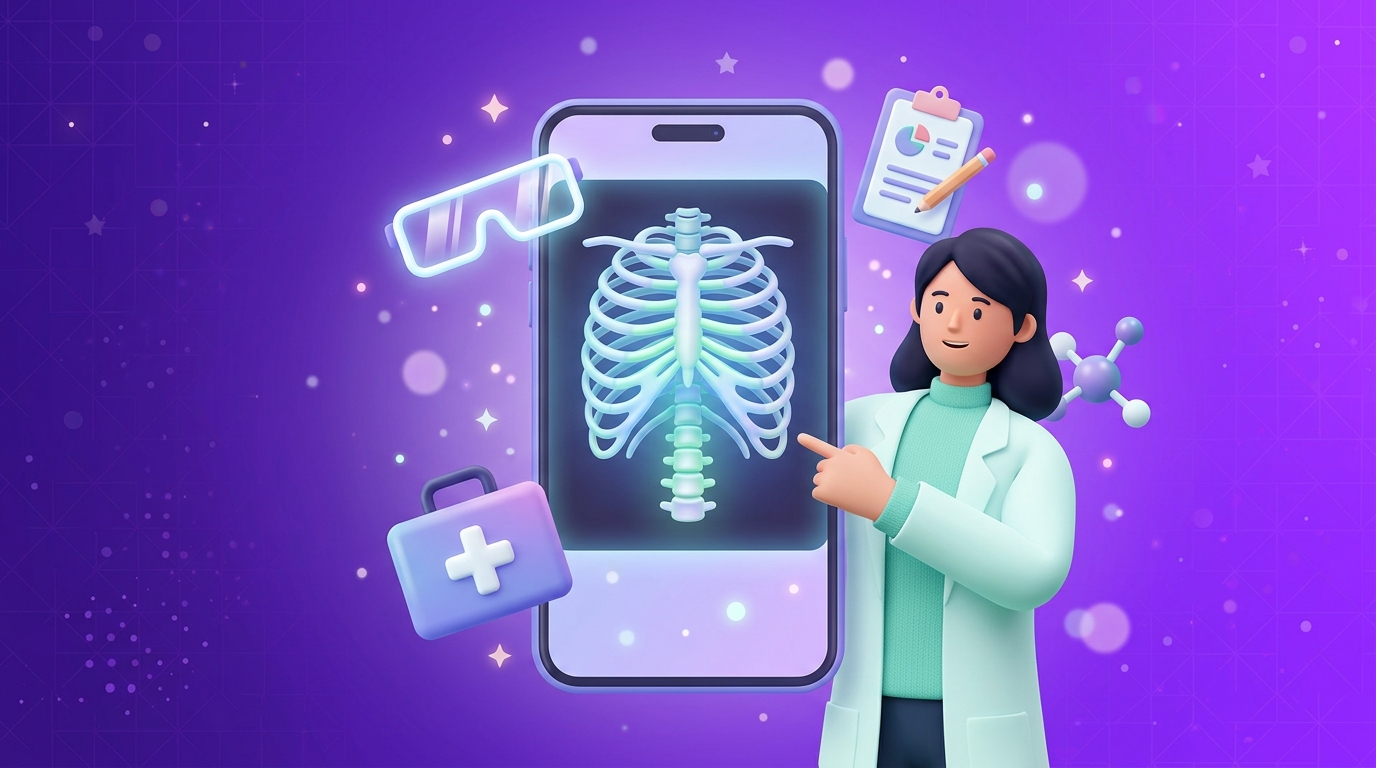
Who hasn't felt that almost scientific curiosity to understand how our own body works from the inside when looking at a dark envelope containing an exam results? The truth is that mobile technology has advanced so much that the old need to use a doctor's office negatoscope is a thing of the past. Today, your mobile device can bring you closer to impressive visual analyses without you having to leave your couch.
Whether it's for studying anatomy, viewing real exams sent by doctors, or simply having fun with realistic simulations, using an app to take X-rays opens up a range of practical possibilities right in the palm of your hand. Let's understand how this technology works and how you can make the most of these resources in your daily life.
How does medical image viewing technology work on mobile phones?
Reading specific files
Modern systems can open large clinic files, making life easier for patients and healthcare professionals.
Digital contrast fine-tuning
Editing tools allow you to lighten or darken bony areas to identify subtle details in images.
Educational and academic use
Medical and biology students use interactive three-dimensional models to easily simulate complex diagnoses.
Digitization of physical plates
You can use the device's camera to transform that old X-ray you have stored in a drawer into a PDF.
Fast and secure sharing
Send the scanned images directly to your trusted doctor in seconds through secure channels.
What makes the difference in usability?
Clean and intuitive interface
Organized menus prevent you from getting lost among hundreds of unnecessary technical buttons while navigating.
Fast image processing
Fast rendering allows large files to load without impacting the overall performance of your smartphone.
Low battery consumption
Well-optimized systems don't drain the phone's battery even when processing complex, high-definition graphics.
Real zoom tools
Zooming in without loss of resolution makes it easier to see small cracks or bone features without blurring on the screen.
How to have a good viewing experience
Avoid reflections on the device screen.
Analyze digital images in low-light environments to avoid losing important black and white contrasts.
Keep the display brightness high.
Temporarily increasing the brightness helps reveal gray nuances that would go unnoticed with low brightness.
Verify the source of your files.
Make sure to download images in high-quality formats so that the X-ray application works perfectly.
Best practices for handling digital images
✓
Organize them into separate folders: Keep your exam files organized by date and body region to expedite future searches.
✓
Back up to the cloud: Save a backup copy on online services to avoid data loss if your phone breaks or is stolen.
✓
Avoid using colored filters: When analyzing bone structure, maintain a grayscale color scheme to avoid creating false impressions.
✓
Check the privacy permissions: Choose reliable systems that ensure your personal medical data is protected from leaks.
Common questions about mobile viewers
❓
Can a cell phone camera emit radiation to take a real X-ray?
No. Smartphones do not possess the physical technology necessary to emit high-frequency electromagnetic waves. Apps that promise to do so function as playful simulations, didactic illustrations, or viewers of pre-existing medical records.
❓
What file formats do medical viewers typically accept?
Most professional systems work with the DICOM format, which is the worldwide standard for medical images. In addition, many applications can read common file types such as PDF, high-resolution JPEG, and PNG.
❓
Can I use images from my cell phone to replace a medical consultation?
Never. Viewing information on a mobile phone is for personal monitoring, study, or quick sharing. A correct diagnosis depends exclusively on the technical evaluation of a qualified healthcare professional in an appropriate setting.
❓
How can I convert a paper-based exam into a digital file using my cell phone?
You can use a camera scanning app. For best results, position the physical plate against a well-lit window during the day and take the photo without using the device's flash.
❓
Do these tools work on all smartphone models?
Yes, most simulation and visualization tools are available for both Android and iOS systems, requiring only an updated operating system version to function smoothly.
Mobile technology gives us everyday superpowers that would have been unthinkable a few decades ago. By understanding the limitations and real uses of an app for taking X-rays or viewing exams, you gain much more autonomy to take care of your health and explore the human body in a completely new way. How about downloading one of these options from your app store today and starting to explore these images with a fresh perspective?